How Oil Industry Cycles Influence Participation Trends in Alberta's Regional Poker Leagues
Written by Yara Jung · Aug 18, 2026
How Oil Industry Cycles Influence Participation Trends in Alberta's Regional Poker Leagues
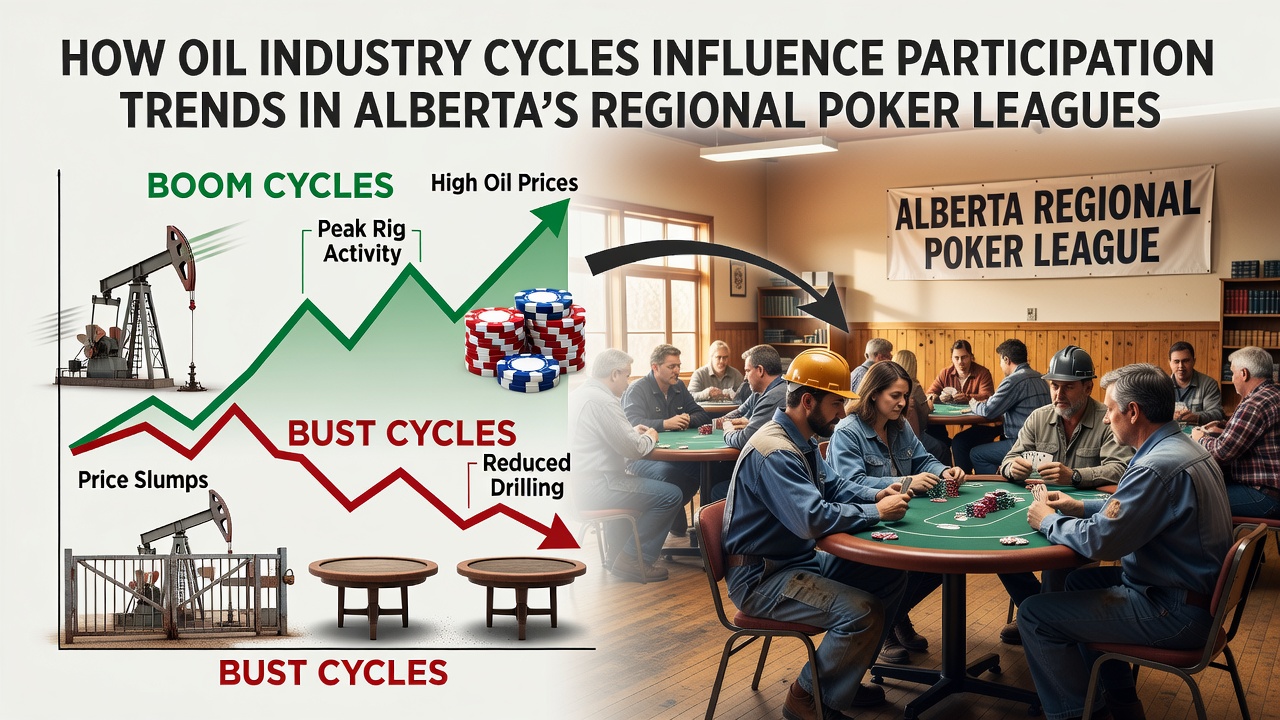
Alberta's economy remains closely tied to global oil prices, and those same price swings create measurable shifts in how residents spend their leisure time, including participation in regional poker leagues across cities like Calgary, Edmonton, and Red Deer. When crude oil benchmarks rise above certain thresholds, employment in the energy sector expands, household incomes increase, and discretionary spending on entertainment venues follows suit according to Statistics Canada economic indicators. Conversely, prolonged downturns in oil markets correlate with reduced entry fees paid into weekly tournaments and lower overall attendance at league events that rely on consistent player turnout.
Researchers tracking both commodity data and gaming participation records have observed that boom periods often coincide with expanded league schedules, new venue partnerships, and higher prize pools funded by increased table fees. Data from the Alberta Energy Regulator shows that when Western Canadian Select prices averaged above $70 per barrel in recent cycles, energy-related job postings surged, and parallel reports from local poker organizers noted corresponding rises in monthly active players. Those same organizers report that during subsequent price collapses below $40, many leagues consolidated events or reduced buy-ins to retain core participants who faced layoffs or reduced overtime hours in the patch.
Historical Patterns in Oil Prices and Leisure Spending
Oil price cycles since the early 2000s demonstrate repeated intervals of expansion and contraction that align with changes in Alberta's service and hospitality sectors, and poker leagues form one visible subset of that broader pattern. Government figures released through Natural Resources Canada indicate that each sustained period of elevated oil revenue generated secondary economic effects, including higher consumer confidence indices and increased spending at recreational facilities. League operators in turn adjusted tournament calendars, added satellite events feeding into larger festivals, and recruited new players from influxes of temporary workers drawn to the province by high-wage opportunities.
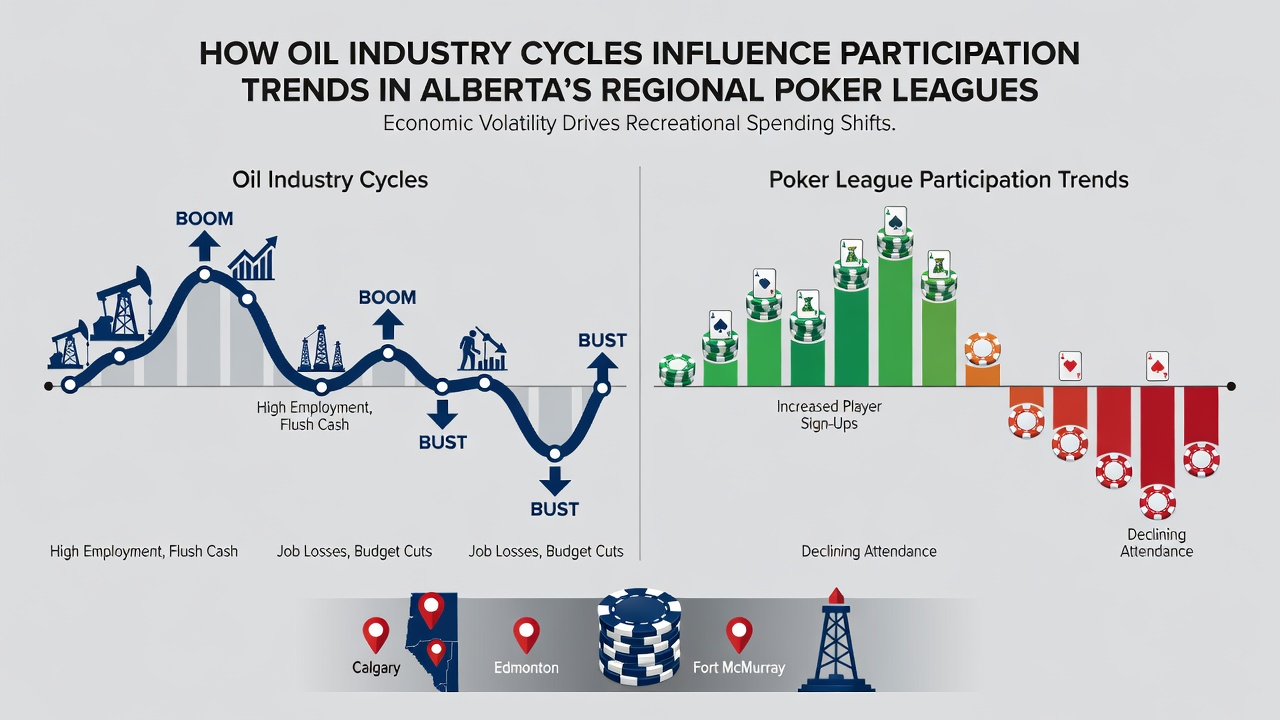
During the 2014-2016 downturn, when prices fell sharply and remained depressed for multiple quarters, several established leagues recorded double-digit percentage drops in registered participants according to internal venue summaries. Recovery phases that followed saw gradual rebounds, particularly once drilling activity resumed and related service companies rehired staff. Observers note that these rebounds rarely returned participation exactly to prior peak levels immediately, because some players who left during the bust had relocated or shifted priorities permanently.
Regional Variations Across Alberta Leagues
Calgary-based leagues, which draw heavily from downtown energy company employees and contractors, exhibit sharper swings compared with leagues in smaller centers where diversified local economies provide more stability. Edmonton leagues, serving a mix of government, manufacturing, and energy workers, display somewhat muted responses to the same oil price movements. Data compiled by regional gaming associations reveal that leagues operating near major extraction sites or pipeline projects experience the most pronounced enrollment changes when rig counts rise or fall.
League formats themselves adapt in response to these economic signals. Texas Hold'em remains the dominant game, yet some groups introduced lower-stakes Omaha or mixed-game nights during slower periods to maintain attendance among cost-conscious players. Venues that host multiple nights per week often shift marketing efforts toward corporate groups and shift workers whose schedules align with oilfield rotations rather than standard nine-to-five routines.
August 2026 Context and Current Cycle Indicators
As of August 2026, oil market analysts continue to monitor supply adjustments from major producing regions alongside demand forecasts tied to global transportation and petrochemical sectors. Alberta leagues have responded to the preceding year's price stability by maintaining steady event calendars while watching for any renewed volatility. Participation metrics collected through venue reporting systems show modest year-over-year consistency rather than dramatic growth or contraction, reflecting a plateau phase in the broader energy employment picture.
Studies from the University of Calgary's economics department have examined how resource-dependent regions manage leisure spending across multiple business cycles, and their findings indicate that poker leagues serve as sensitive barometers because they combine social interaction with modest financial commitment. When household balance sheets improve, players return to higher buy-in structures and more frequent attendance; when uncertainty persists, they gravitate toward freeroll qualifiers or smaller weekly gatherings.
External Economic Factors and League Adaptations
Transportation costs, housing prices, and interprovincial migration patterns also interact with oil cycles to shape who remains available to join leagues. During upswings, temporary workers from other provinces increase the pool of potential participants, while downturns accelerate out-migration that reduces the local player base. League administrators have therefore developed flexible membership models that accommodate seasonal workers whose presence in Alberta tracks drilling seasons.
Industry reports compiled by the Canadian Gaming Association document similar patterns in other recreational sectors, confirming that discretionary entertainment spending follows resource revenue with a short lag. Poker leagues, being grassroots and community-driven, reflect these trends more directly than larger casino operations that draw from broader tourist traffic.
Conclusion
Alberta's regional poker leagues continue to mirror the province's oil-driven economic rhythm through measurable changes in attendance, event frequency, and format adjustments. Longitudinal data from government agencies and academic researchers establish consistent correlations between commodity price movements and participation levels, while league operators implement practical responses that sustain community engagement across both expansion and contraction phases. As energy markets evolve through 2026 and beyond, these same patterns are expected to persist, offering ongoing evidence of how resource cycles shape local recreational activities.